Voting To Be Extended To Every Sentient Being On These Islands, including Toddlers and Badgers.

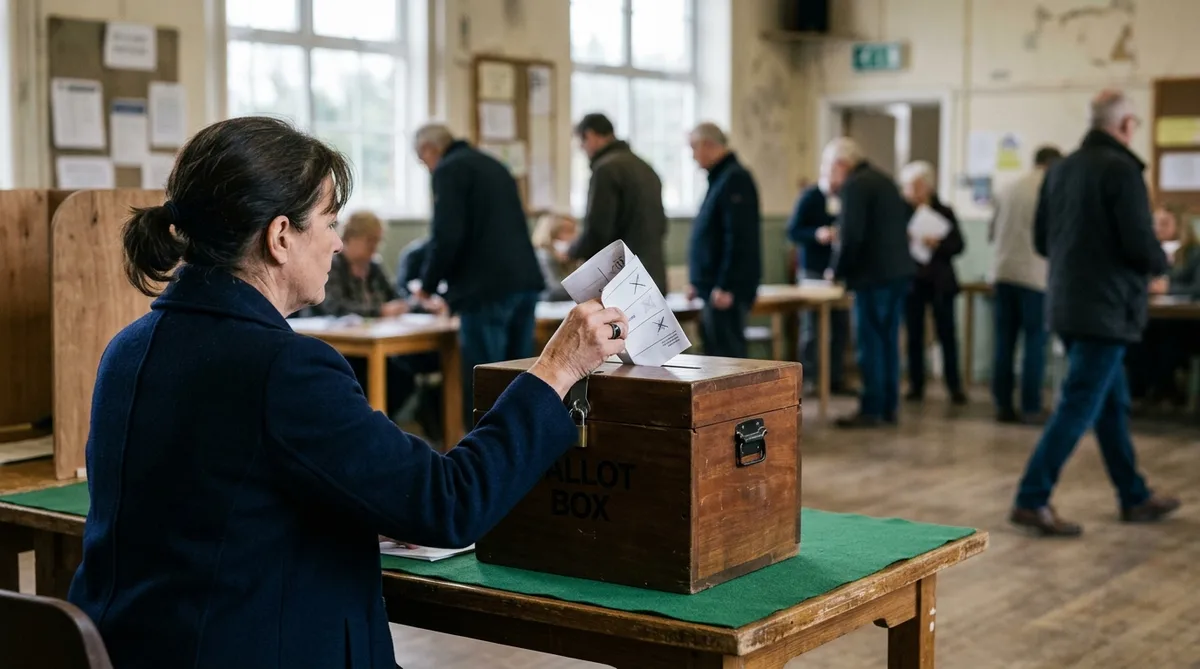
The nation will be asked to select its own electoral system in a referendum whose rules will themselves be decided by the result of that referendum, and, in a late addition described by Whitehall as "bold, inclusive and almost certainly reversible", the vote will be extended for the first time to every sentient being on this island.
That means children, ministers confirmed. It also means animals. Officials were asked to define sentience and replied that they had decided not to, on the grounds that defining it would take longer than simply handing a ballot paper to a horse and seeing what happened.
Under the plan trailed this week, voters will be handed a paper listing every available model of democracy, plus one box marked "the current one, honestly, I've got a bus to catch". A pictogram edition will be issued for the under-sevens, a scratch-and-sniff edition for dogs, and a version printed on something edible for anything that eats the first two. The papers will then be sorted into regional piles, redistributed, re-sorted, and read aloud in a hall in Coventry until somebody cries, which under the new rules may be a baby.
The difficulty, officials concede, is that nobody can say how the winning system will be identified until the country has picked a system for identifying winners. "We'll know the answer the moment we know how to ask the question," a Cabinet Office source said. "It's really a chicken-and-egg problem, except now the chicken votes, the egg votes, and the farmer has to be registered as the proxy for both."
Andy Burnham, who has long argued that everyone's vote should count, is understood to be relaxed about the scope of the word everyone. Allies say the Prime Minister believes the public has an appetite for proportional representation, the single transferable vote, the additional member system and also a nap, and that the nap constituency is now enormous and includes most of the new electorate.
Nigel Farage, asked whether electoral reform was a priority, suggested there were far more urgent matters, among them the referendum on whether to hold the referendum, and whether swans count. He conceded he would probably win on 29 per cent of the vote regardless, adding that he had always done well with geese.
"We have modelled it extensively," a returning officer in the East Midlands said. "Under first past the post, the winner is first past the post. Under the single transferable vote, the winner is whoever is standing nearest the urn when the room runs out of patience.
There is also the question of what happens to the losing systems. Ministers have ruled out keeping them in a drawer, after the 2011 experience, and are instead considering a national day of reflection in which the public brings an unwanted method of counting to a church hall and leaves it beside the tins. This has proved the most popular element of the package by some distance, chiefly because the country has spent several decades perfecting the art of donating something it never intended to use again. Parish officials report that the boxes are already filling with discarded constitutional arrangements, two closed lists, and a quantity of chickpeas that predates the coalition.
Critics say the whole exercise merely postpones the thing it proposes. "You cannot acknowledge that the system is unfair and then use it one more time for old times' sake," one reform campaigner said. "That is like noticing the brakes don't work and deciding to find out where the car ends up, except the car is now being driven by a committee of ducks who have all ranked each other second."
The Government insists progress is being made. A commission will be appointed, in due course, by a method to be confirmed, and will report at a moment that will be clear in retrospect. Asked directly whether the next election would be fought under a new system and by the entire animal kingdom, a spokesman replied: "Yes. Or no. We're putting it to the country, and the country, which is now considerably larger than it was on Tuesday, will decide."
The paper put one follow-up question, which we are honouring by printing in full: what if the referendum is a tie? The answer, after a pause of eleven seconds, was: "Then we'd have a very interesting afternoon, and we'd probably ask Pamela."
Have your say