Treasury Confirms Vape Duty Is Phase One Of A Broader Tax On Coping

The nation woke on Thursday to a new tax that exists, is legally binding, is being enforced with the full weight of the state, and which nobody will feel for half a year. Treasury officials have called this "the smoothest possible landing for a policy", on the grounds that a policy nobody notices cannot be opposed by anybody.
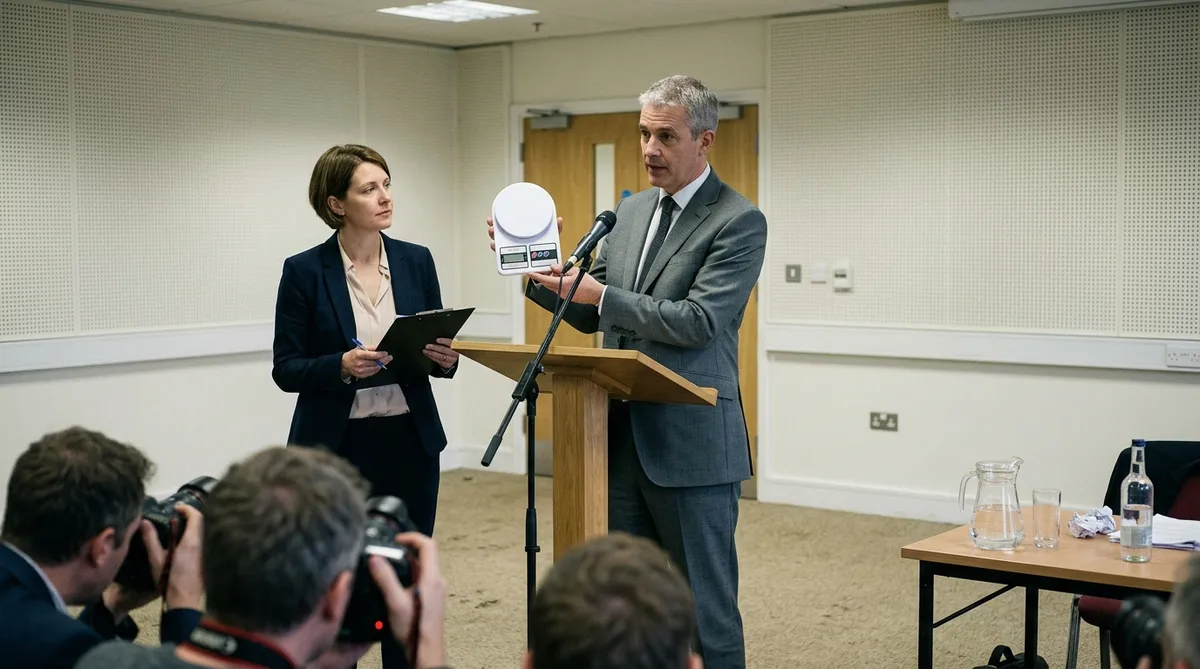
The duty is charged at two pounds twenty per ten millilitres of e-liquid, a unit the Treasury has described as "very small, which is why there are so many of them". A spokesman confirmed that revenue projections had been calculated by weighing a cloud.
"We took an ordinary exhaled cloud, of the sort you walk through outside any railway station in Britain, and we weighed it," the spokesman said. "It came to approximately nothing. We then multiplied nothing by the entire population and arrived at a figure we have already spent."
The context, officials were happy to supply, is that the country is already comprehensively bankrupt. "We are skint," the spokesman said. "Properly skint. The sort of skint where you stop opening the post. So we sat down, we created a list of everybody in Britain who has money, and we went through it very carefully, and then we put the list in a drawer and taxed a man in a bus shelter instead."
Asked why HMRC was not instead directed at the enormous multinationals that pay nothing at all while receiving grants, reliefs, enterprise zones and the occasional ribbon-cutting from a minister, the department said those arrangements were "structurally complicated", whereas a bloke with a mango vape was "structurally standing right there". A follow-up question about corporate welfare was logged as received.
"You have to understand the arithmetic," the spokesman continued. "A global firm employs nine hundred lawyers and is registered in a filing cabinet in a country we cannot pronounce. Whereas the working class has, at most, three remaining vices, and two of them are already taxed to the ceiling. We went for the last one. It was the only one that could not afford an accountant."
The department was keener to talk about what it called the wider framework. "For years the country has been coping free of charge," the spokesman said. "Pacing about outside. Standing in a doorway in the rain doing a long breath. Sitting in a parked car for four minutes before going inside. None of it taxed. Not a penny. And we simply could not go on like that."
Retailers have six months to clear old stock at the old price, a transitional period economists have begun calling The Long Inhale. During this window the duty is simultaneously in force and invisible, a condition HMRC has compared to Schrodinger's cat, before conceding that in this analogy the cat is also strawberry flavoured.
Enforcement will rest on a new traceable stamp, applied to every legal vaping product in the country from April. The stamp is itself the size of a vaping product, which officials admit presents "a stacking problem" they intend to solve with a second, smaller stamp confirming the first stamp is genuine. A third stamp, confirming the second, is understood to be at consultation stage. No stamp is planned for anything owned by a shareholder.
The escalation came on Thursday afternoon, when a junior official confirmed that the duty is the first of eleven scheduled instalments, each targeting what the drafting calls a self-administered calming behaviour. Instalment two is understood to cover the second biscuit. Instalment three covers the specific noise people make when they sit down on a sofa. Instalment seven is simply labelled "the bath", with a footnote reading "we know, but the numbers work".
A separate line in the guidance, which the department insists is not a line in the guidance, appears to bring the following within the definition of a taxable vapour: breath on a cold morning, the top of a casserole, a bathroom after a shower, and most of October. The Treasury says it has no plans to pursue October at this time, October having recently incorporated in Luxembourg.
Officials remain confident the measure will work. "The genius of it," the spokesman said, "is that the price does not go up for six months, so nobody changes their behaviour, and then in six months the price goes up and everybody has already stocked up, so nobody changes their behaviour. We call that policy stability."
Asked whether a tax on coping might eventually require people to cope with the tax, creating a loop the Treasury could charge for twice, the spokesman went quiet for some time and then asked for the question in writing. We sent it. We were told that something would, eventually, happen, and that when it did, the Treasury would be first to announce it, assuming it can still afford the podium.
Have your say